
 Español
 Portugues
 Pусский
 Français
 Deutsch
 日本語
日本語 한국어
한국어 العربية
 Italiano
 Nederlands
 Ελληνικά
 Svenska
 Polski
 ไทย
ไทย Türk dili
 हिन्दी
 Indonesia
 Melayu
 Tiếng Việt
 中文
中文 dansk
dansk Magyar
 қазақ
қазақ বাংলা
বাংলা עִברִית
 čeština
 Soomaali
 မြန်မာ
 فارسی
فارسی українська
 norsk
norsk Gaeilge
 беларускі
 Română
 ພາສາລາວ
 Filipino
 lietuvių
 Cymraeg
 македонски
 Suomalainen
 slovenský
 o'zbek
 اردو
اردو հայերեն
 Igbo
Igbo български
 سنڌي
سنڌي Shona
Shona සිංහල
සිංහල Hrvatski
 íslenskur
 galego
 català
 Zulu South Africa
 Afrikaans isiXhosa
 ಕನ್ನಡ
ಕನ್ನಡ lëtzebuergesch
 Indonésia Sunda
 Кыргызча
 тоҷикӣ
 Србија
 Twi
Twi Hawaii
 Cebu
Cebu नेपाल
नेपाल euskara
 frissi
 יידיש
יידיש latvija
 slovenija
 kiswahili
 ਪੰਜਾਬ
ਪੰਜਾਬ پښتو
پښتو საქართველოს
 hua moni
 bosna
bosna Kreyòl ayisyen
 Eesti
Eesti Gàidhlig na h-Alba
 Samoa
Samoa Монгол
 Azərbaycan
 አማራ
አማራ Shqipëria
 Malagasy
 Malta
Malta ខ្មែរ
ខ្មែរ Chicheva
 中文(繁体)
 ଓଡିଆ
ଓଡିଆ Setswana
 Afrikaans
 Aymara
 Башҡорт
 Türkmenler
 ትግሪኛ
ትግሪኛ Afaan Oromoo
 অসমীয়া
 Kinyarwanda
 Ilocano
 Wolof
Wolof अवधी
अवधी Oluganda
 Bikol
Bikol Fulɓe
Fulɓe Kikongo
 Sango
Sango ދިވެހި
 Lingala
 मैथिली
 Tsonga
 ꯃꯦꯏ ꯊꯥꯏ꯫
 brezhoneg
 Furlan
 नेवा
नेवा རྫོང་ཁ
 Santali
 Аҧсуа
Аҧсуа Нохчийн
 Чӑваш
Чӑваш Татар
Татар Batak Karo
 دری
دری Diura
Diura Fengyu
 Eʋegbe
 Iban
Iban Fiji
Fiji Tonga
Tonga Inuktitut
 Nahuatl
 maaya yucatec
 Runasimi
 guarani
 Qafar
Qafar Acholi
 Dinka
Dinka Luo
Luo Lundi
Lundi isiNdebele
 Tshivenḓa
 Sesotho sa Leboa
 Sesotho sa Borwa
 Ndumbe
 Papuan Pidgin
 Rromani ćhib
 Thok Nath

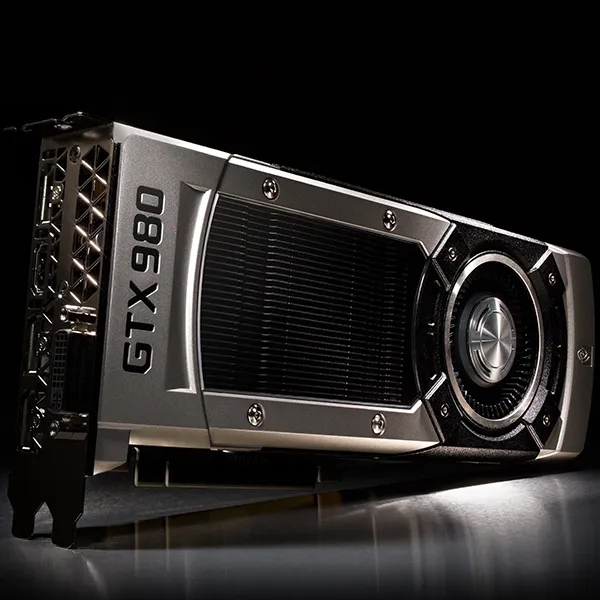

high angle belt conveyor
High Angle Belt Conveyor: Design and Applications A high angle belt conveyor is a specialized material handling system designed to transport bulk materials at steep inclines or even vertically, overcoming the limitations of conventional belt conveyors, which typically operate at angles below 20 degrees. This type of conveyor is widely used in industries such as mining, cement, power generation, and agriculture, where space constraints or elevation requirements demand efficient vertical or near-vertical material transport. Key Features and Design 1. Belt Structure: Unlike flat belts, high angle conveyors often use corrugated sidewalls and cleats (or flights) attached to the belt surface. These features prevent material rollback and ensure stability during steep ascents. The belt may also incorporate reinforced layers for durability under high tension. 2. Loading and Discharge: The system includes specialized loading chutes to evenly distribute material onto the belt, minimizing spillage. At the discharge point, the belt transitions smoothly to release the payload without blockages. 3. Drive Mechanism: High torque drives are essential to handle the increased load resistance from steep inclines. Multiple drive units or high-power motors may be employed to maintain consistent speed and prevent slippage. 4. Support Structure: The conveyor frame is engineered to withstand the additional stresses of high-angle operation, often using heavy-duty rollers or idlers with reinforced bearings. Advantages - Space Efficiency: By transporting materials vertically or at steep angles, these conveyors reduce the footprint compared to traditional systems requiring long, gradual inclines. - Energy Savings: High angle conveyors often consume less power than alternative systems like bucket elevators or multiple transfer conveyors. - Versatility: They can handle a wide range of materials, from fine powders to coarse aggregates, with minimal degradation or spillage. Applications - Mining: Transporting ore or coal from deep pits to surface processing plants. - Cement Plants: Moving clinker or raw materials between different levels of production facilities. - Power Stations: Feeding coal or biomass into boilers at elevated heights. - Ports and Terminals: Loading/unloading ships or stockpiling bulk materials in confined spaces. Challenges - Belt Wear: The cleats and sidewalls experience higher abrasion, requiring regular maintenance. - Material Carryback: Residual material may stick to the belt, necessitating cleaning systems. - Initial Cost: The complex design and robust components can lead to higher upfront investment compared to standard conveyors. Conclusion High angle belt conveyors offer a reliable and efficient solution for vertical or steep material transport, combining innovative design with operational flexibility. Their ability to optimize space and reduce energy consumption makes them a preferred choice in industries where conventional conveyors fall short. Proper selection, maintenance, and alignment with material characteristics are critical to maximizing their performance and lifespan.
Products
Category:
-
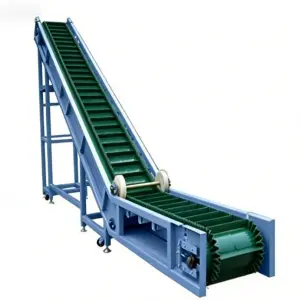
Corrugated Sidewall Belt Conveyor
Category: Conveyor SystemsBrowse number: 19Number:Release time: 2026-01-08 10:14:39Product OverviewThe corrugated sidewall belt conveyor, also known as a high angle belt conveyor, is an advanced bulk material conveying system designed to transport materials at steep inclines and even vertical angles up to 90 degrees. By integrating a base belt, corrugated sidewalls, and transverse cleats into a single unified structure through a secondary vulcanization process, this conveyor system achieves exceptional strength, flexibility, and long-term reliability.Unlike conventional flat belt conveyors or patterned belts, the corrugated sidewall belt conveyor is capable of handling extre...
News
Category:
-
[industry news]High Angle Belt Conveyor Solutions for Limited Space Applica...
2026-01-09 13:00:12
Case
Category:
No search results found!
Video
Category:
No search results found!
Download
Category:
No search results found!
Job
Category:
No search results found!
Featured Products
No search results found!



 WhatsApp
 Phone
Phone